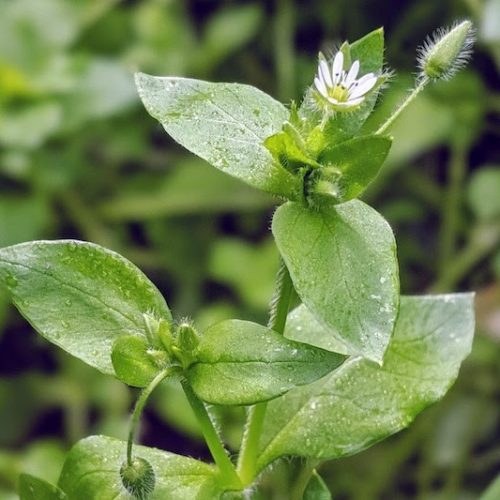

Parsley
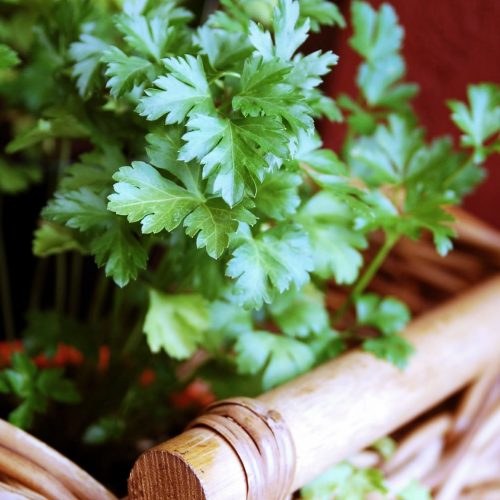
Botanical Name: Petroselinum crispum and P.c. neapolitanum
Family: Apiaceae
Description: Parsley is a biennial but is frequently grown in colder climates as an annual. The leaves of French parsley (P. crispum) are curly and the leaves of Italian parsley (P.c. neapolitanum) are flat. The plant has an erect stem with bright-green compound leaves and small white flowers growing in clusters, with ribbed seeds.
Parts Used: Leaves, roots, seeds and oil
History
Cultivated for more than 2,000 years, parsley was first used medicinally, prior to being consumed as a food. Its name is derived from the Greek word meaning ‘rock celery’ and it is indeed related to the celery family.
Medieval and Renaissance herbalists used parsley to treat kidney and stomach problems, insect bites and to avoid infections. But its curative assets have been largely ignored in favour of its conventional role as a garnish.
Therapeutic Properties
Chinese and German herbalists recommend parsley tea to help control high blood pressure. Tea made with the root is used to treat kidney stones and bladder infection, and to promote digestion, settle the stomach after a meal and reduce flatulence.
Others use it to treat congestion caused by flu and colds, to lessen asthma attacks, for kidney and liver obstructions and anaemia. The herb is also used in poultices for tired and irritated eyes, and to speed the healing of bruises.
The leaves, if crushed to extract the juice, relieve itches and stings from insects, making a superb mosquito repellent, and the seeds can be used as a diuretic.
Eating parsley is thought to reduce the risk of cancers such as breast, digestive tract, skin and prostate.
Recent evidence suggests that it may be instrumental in bone formation, preventing osteoporosis and keeping the circulatory and nervous systems healthy.
Cautions
People with known allergy or hypersensitivity to members of the Apiaceae plant family should avoid parsley. It is high in oxalic acid and may irritate kidney tissue.
Body Energetics
Cleans out toxins, is grounding and gets things moving.